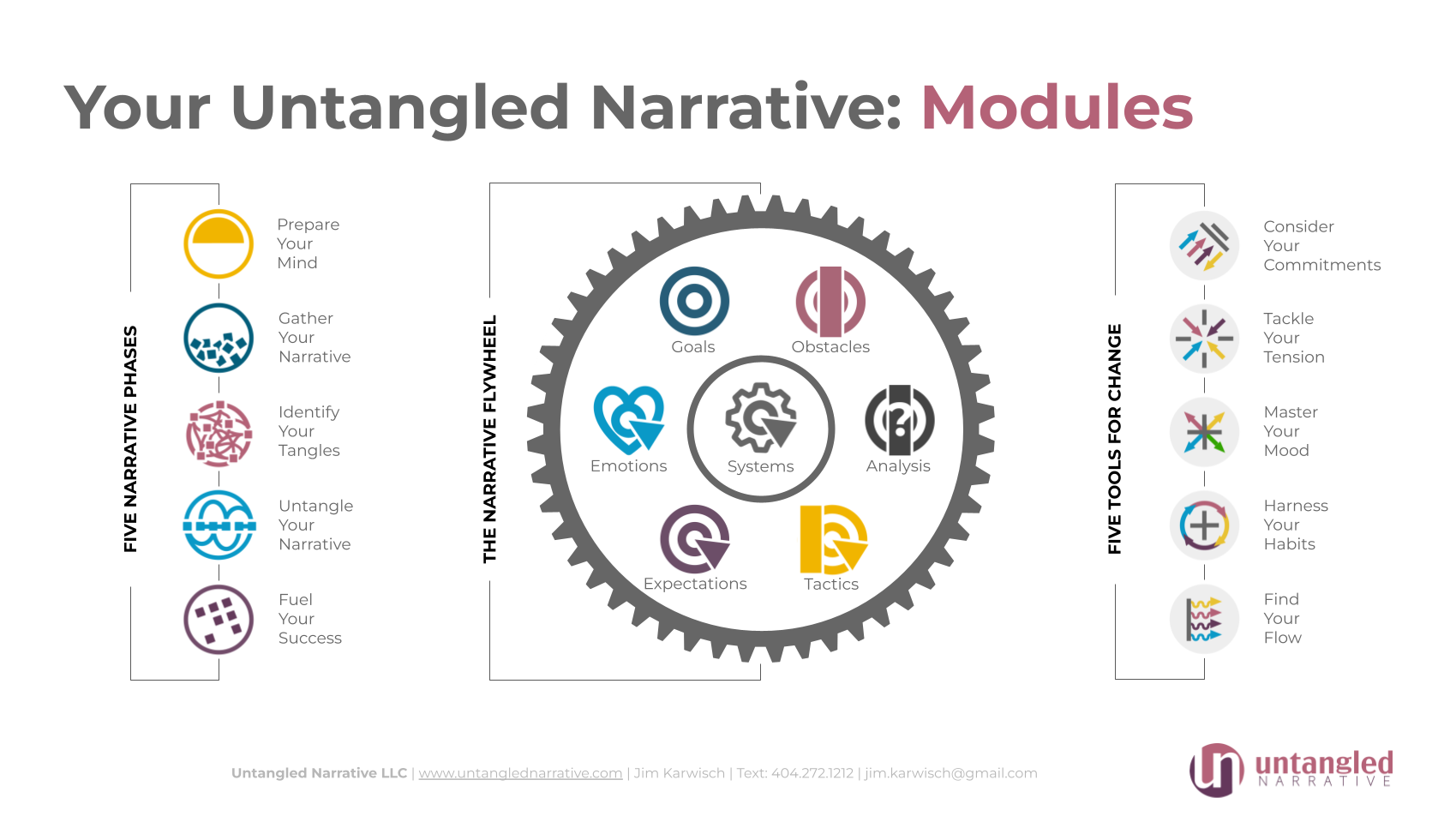
Untangled Narrative helps you recognize new possibilities, actively experiment with change, build confidence and skills, and eventually become someone who trusts their own expertise and multiplies their impact.
Wherever you are in your journey, there's a next step that makes sense. Our explorer below helps you identify exactly where you are and what comes next.
Explore each stage of this example journey from being tangled to leveling up. These are general thresholds of an average person. You may not agree with all descriptions and not all clients start with tangled (Example: You may arrive ready to start in "Building Skill-sets")
Select the role that best describes your situation to see how each threshold might show up in your context.
Leaders, directors, senior managers, and anyone responsible for organizational outcomes through other people. This includes both seasoned leaders navigating new complexity and newer leaders growing into expanded responsibility. The friction often lives in the gap between positional authority and actual influence.
Despite the title and authority, things aren't moving. Decisions get made but not implemented. The leader may feel like they're pushing against constant resistance, or that they're working harder than anyone but producing less impact. There's often a sense of isolation - the job feels lonelier than expected.
The inner narrative may swing between self-doubt ("maybe I'm not cut out for this") and blame ("if people would just do what I ask"). The outer narrative might be inconsistent - saying different things to different audiences, or defaulting to corporate-speak that doesn't land. The social narrative may include whispered concerns about their leadership - people are watching and forming opinions.
The move toward Hopeful often comes from honest feedback that lands, exposure to a different leadership model, or a moment of recognition that the current approach isn't sustainable. Something opens the possibility that the problem isn't just other people.
There's acknowledgment that something about their leadership approach needs to shift. They're paying attention to leaders they admire, reading differently, asking questions about what effective leadership actually looks like in practice.
The inner narrative is in flux - old certainties are loosening but new ones haven't solidified. They're starting to notice the gap between how they think of themselves as a leader and how they might be experienced by others. Curiosity is emerging about what's actually landing versus what they intend.
The work here is moving from consuming leadership content to actively experimenting with different approaches. The transition to Untangling happens when they start testing new behaviors rather than just thinking about them.
Active experimentation with leadership behaviors - different ways of running meetings, giving feedback, making decisions, communicating priorities. Some experiments feel awkward. They're paying close attention to what actually produces different results.
They're working all three layers - noticing their internal reactions and questioning whether those reactions serve them, trying new language and approaches in how they communicate, and watching for shifts in how people respond and talk about them. It often feels like performing at first.
The work here is pattern recognition and iteration - figuring out what works for them specifically, not just what works in theory. The transition to Agency happens when new approaches start feeling natural and producing consistent results.
A leadership practice has emerged - not just reacting to situations but intentionally choosing how to engage. They can navigate difficult conversations, make unpopular decisions, and maintain composure under pressure. The gap between intention and impact has shrunk.
The inner narrative has become more stable and grounded - they know what kind of leader they want to be and can assess themselves against that standard. The outer narrative is clearer and more consistent. The social narrative is shifting - people are updating their perceptions based on changed behavior.
The work here is discerning what's actually within their control and focusing energy there rather than fighting battles they can't win. The transition to Balance happens when they stop trying to be everything to everyone and start making intentional choices about where to invest.
Leadership energy is allocated intentionally. They've learned to say no, to delegate meaningfully, to protect their capacity for high-value work. Relationships with key stakeholders are solid. The role feels more sustainable and less all-consuming.
The three narratives reinforce each other. The inner narrative supports confident decision-making without arrogance. The outer narrative is calibrated to different audiences while remaining authentic. The social narrative has become an asset - their reputation precedes them in useful ways.
The work here is clarifying leadership values and ensuring decisions align with them, even when alignment creates friction. The transition to Skill-sets happens when intentional choices start compounding into distinctive leadership capabilities.
Leadership capabilities are compounding - pattern recognition is faster, interventions are more precise, influence extends further. They've developed signature approaches that others recognize. They can operate effectively in increasingly complex situations.
Inner confidence is built on accumulated evidence across many situations. Outer articulation of leadership philosophy is clear and teachable. The social narrative positions them as a leader worth learning from - they're invited to share their perspective.
The work here is intentional development of next-level capabilities and thinking about how to make their leadership approach transferable. The transition to Leveling Up happens when developing other leaders becomes a central focus.
Their primary impact comes through other leaders they've developed. They're shaping organizational culture and capability beyond their direct reports. Their legacy is visible in how others lead, not just in their own decisions.
The inner narrative centers on stewardship and succession - developing the next generation of leaders. The outer narrative often focuses on elevating others and sharing frameworks. The social narrative has expanded to influence beyond the organization.
The work here is sustainable impact and graceful evolution - continuing to grow while ensuring their influence persists through the leaders they've developed.
See yourself somewhere on this journey?
Let's TalkArtists, designers, writers, musicians, makers, and anyone whose work depends on generating original ideas and bringing them into the world. This includes freelancers, agency creatives, in-house creative roles, and independent artists - anyone who has felt the particular friction between having something to express and struggling to get it out, seen, or valued.
A creative at this stage might have dozens of half-started projects but struggle to finish any of them. The work that used to flow now feels effortful - there's often a sense of having lost access to something.
The inner narrative may be running constant doubt: "maybe I'm not actually that good" or "I should be further along by now." When talking about their work, they undersell or over-explain, making it hard for others to grasp what they do. The social narrative is thin - people don't know how to refer them or describe their work when opportunities arise.
The move toward Hopeful often comes from outside - exposure to another creative's honest account of struggle, a framework that reframes the block, or simply someone asking the right question that cracks open curiosity.
Something has shifted - the block starts to feel less permanent and more like a solvable problem. There's often renewed interest in how other creatives work, what their processes look like, how they push through resistance.
The inner critic is still loud, but there's new curiosity about whether the story could change. They're starting to notice the gap between actual capability and how they've been describing their work - sensing that the outer narrative might not be serving them.
The work here is converting curiosity into action - moving from "maybe things could be different" to actually trying something. The transition to Untangling happens when they stop researching change and start experimenting with it.
This is the messy experimentation phase. Shipping before it feels ready. Noticing which conditions support good work and which shut it down. Some experiments fail, but they're gathering real data about what actually works for them.
They're actively working all three layers - catching the inner critic and questioning its accuracy, trying new language when describing their work to see what resonates, paying attention to whether others are starting to talk about them differently. It often feels awkward and inconsistent.
The work here is tolerance for discomfort and pattern recognition - noticing what actually works versus what they assumed would work. The transition to Agency happens when experiments start producing consistent, repeatable results they can trust.
A creative here has developed a practice, not just reliance on inspiration. They know how to start even on low-motivation days. The gap between "idea" and "in progress" has shrunk significantly.
The inner narrative has shifted from reflexive self-doubt to something more grounded - a clearer sense of what they actually bring. They can articulate their work without over-explaining or apologizing. People who know their work are starting to use language that actually fits.
The work here is distinguishing what's controllable from what isn't - focusing energy on their actual sphere of influence rather than chasing external validation. The transition to Balance happens when they stop trying to prove themselves and start making choices based on alignment.
Creative time gets protected without guilt. Projects get chosen based on actual alignment rather than what seems impressive or expected. There's clarity about what feeds the work versus what drains it.
The three narratives are working together now. The inner story supports taking creative risks. The outer communication is clear enough that right-fit opportunities find them. Others know what to say when making referrals - the social narrative has become accurate and portable.
The work here is values clarification and intentional choice - getting clearer on what matters and making decisions that reflect it, even when those choices disappoint others. The transition to Skill-sets happens when aligned choices start compounding into distinctive capability.
Craft is compounding - techniques learned years ago combine in unexpected ways. A recognizable signature emerges. They're developing approaches they could articulate and teach to others.
Inner confidence is built on accumulated evidence rather than wishful thinking. Outer articulation has become natural and adaptive to different contexts. The social narrative precedes them - people know their work by reputation before meeting them.
The work here is intentional development and integration - identifying which capabilities to deepen, understanding how skills connect to each other, and making expertise transferable. The transition to Leveling Up happens when their growth starts enabling others' growth.
Influence extends beyond personal output. Other creatives seek guidance on how to think about problems. There's often mentorship happening - shaping how others approach the craft.
The inner narrative now includes responsibility for shaping others' development. Outer communication often focuses on elevating others or the field itself. The social narrative has expanded beyond individual work to broader influence and legacy.
The work here is sustainable leadership and multiplication - building systems and relationships that create impact beyond direct personal effort, while maintaining their own continued growth.
See yourself somewhere on this journey?
Let's TalkFounders, business owners, solopreneurs, and anyone building something of their own. This includes both early-stage builders figuring out product-market fit and established business owners navigating growth or transition. The friction often lives in the tangle between personal identity and business identity.
The business might be technically running but it doesn't feel like it's working. Revenue is inconsistent or comes at too high a cost. There's constant hustle without corresponding progress. The founder may be doing everything themselves while knowing that's not sustainable.
The inner narrative often conflates personal worth with business performance - a bad month feels like personal failure. The outer narrative may be scattered - different pitches to different audiences, no clear positioning. The social narrative might not exist yet, or might be based on outdated information about what the business actually does.
The move toward Hopeful often comes from seeing another entrepreneur's honest account of similar struggles, getting feedback that reframes the problem, or reaching a breaking point that forces reconsideration of the current approach.
Something has shifted - the current situation feels changeable rather than fixed. There's renewed curiosity about different business models, approaches, or ways of working. They're paying attention to how other entrepreneurs have navigated similar phases.
The inner narrative is starting to separate personal identity from every business outcome - creating a little space to evaluate options more objectively. They're noticing that how they describe the business might not be serving them. Curiosity about what else is possible is emerging.
The work here is converting curiosity into experimentation - testing assumptions rather than just questioning them. The transition to Untangling happens when they start making small changes and observing results rather than planning the perfect pivot.
Active experimentation with offers, pricing, positioning, or business model. Some experiments fail, but they're generating real data. They're getting clearer on what actually works versus what they thought should work.
They're working all three layers - catching catastrophizing thoughts and examining them, testing different ways of describing what they do, paying attention to which messages generate traction. The outer narrative is in flux, which can feel destabilizing but is necessary.
The work here is pattern recognition and willingness to let data override assumptions. The transition to Agency happens when experiments reveal reliable patterns they can build on.
The business has clearer foundations - an offer that works, a client profile that fits, a model that's at least somewhat repeatable. The founder can distinguish between problems worth solving and distractions. There's less reactive scrambling and more intentional building.
The inner narrative has developed some stability - setbacks are setbacks, not identity crises. The outer narrative has become clearer and more consistent. The social narrative is starting to coalesce - people know what the business does and can describe it to others.
The work here is focusing on what's actually within their control and building systems rather than constantly firefighting. The transition to Balance happens when they stop saying yes to everything and start making strategic choices about where to focus.
The business is aligned with the founder's values and lifestyle goals - or they're actively working to create that alignment. Revenue is more predictable. They've learned to say no to wrong-fit opportunities. The business supports their life rather than consuming it.
The three narratives reinforce each other. The inner narrative supports sustainable ambition rather than desperate hustle. The outer narrative attracts right-fit clients and opportunities. The social narrative has become a business asset - referrals happen because people know what to say.
The work here is values clarification and intentional growth - deciding what kind of business they actually want and making choices that build toward it. The transition to Skill-sets happens when aligned choices start compounding into distinctive business capabilities.
Business capabilities are compounding - they can see patterns faster, serve clients more effectively, and operate in more complex situations. They've developed signature approaches that differentiate the business. Systems allow them to scale impact beyond their personal hours.
Inner confidence is built on accumulated business evidence. Outer articulation of what makes the business distinctive is clear and compelling. The social narrative precedes them - people know the business by reputation.
The work here is intentional capability development and thinking about how to make the business less dependent on the founder. The transition to Leveling Up happens when their success starts enabling others' success.
Their impact extends beyond their own business - mentoring other founders, shaping industry practices, or building something that creates opportunity for others. The business might have evolved to include other leaders or might serve as a platform for broader influence.
The inner narrative includes responsibility for contribution beyond personal success. The outer narrative often focuses on elevating others or advancing the field. The social narrative has expanded to industry influence or thought leadership.
The work here is sustainable impact and legacy - building systems and relationships that create value beyond the founder's direct involvement.
See yourself somewhere on this journey?
Let's TalkThis persona addresses team leaders navigating collective dynamics - managers, department heads, project leads, and founders responsible for how a group of people works together. The client is the leader, but the focus is on the team's patterns, alignment, and capacity to function as a unit.
The same issues keep surfacing but nothing changes. People have stopped raising concerns because it doesn't seem to matter. There's talent on the team that isn't translating into traction. Meetings cycle without resolution, and silos have hardened.
The team's inner narrative - how members talk to themselves about the team - may include resignation: "this is just how it is here." The outer narrative is fragmented; different members describe the team's purpose and problems differently. The social narrative within the organization may be dismissive or skeptical - other departments have stories about this team that aren't flattering.
The move toward Hopeful often happens when someone names the pattern out loud and there's relief instead of defensiveness. The team starts considering that the friction might be structural rather than personal - which means it could actually change.
There's acknowledgment that something needs to shift. The leader or team members are looking at how other teams operate, asking questions about what's possible. Energy that was going into workarounds starts redirecting toward actual solutions.
The inner narrative begins to crack open - "maybe we're not a dysfunctional team, maybe we just have dysfunctional patterns." There's growing awareness that how the team talks about itself (to each other and to outsiders) might be part of the problem. Curiosity emerges about what a different story could look like.
The work here is moving from venting to experimenting. The transition to Untangling happens when the team stops just talking about problems and starts testing different approaches - even small ones.
The team is experimenting with decision-making processes, communication norms, or how conflicts get surfaced. Not every experiment works, but there's growing tolerance for trying things differently and learning from what happens.
The team is actively renegotiating its story. New language gets tested in meetings. The leader is paying attention to whether the social narrative is starting to shift - are other parts of the organization noticing change? Internal conversations are more honest about what's working and what isn't.
The work here is building shared evidence - collecting enough data points about what works that the team starts trusting new patterns over old defaults. The transition to Agency happens when new ways of working become reliable rather than experimental.
Roles and ownership have become clearer. People know what's theirs to decide and what requires escalation. Less energy goes toward navigating ambiguity, more toward the actual work. The team can handle disagreement without it derailing progress.
The team's inner narrative has shifted to something more confident and accurate - they know what they're good at and where they struggle. The outer narrative is more consistent; members describe the team similarly. The social narrative is improving - other parts of the organization are updating their assumptions.
The work here is clarifying what the team can control versus what depends on external factors - focusing collective energy on their actual sphere of influence. The transition to Balance happens when the team starts making intentional trade-offs rather than reactive ones.
Trade-offs happen explicitly rather than by default or exhaustion. The team protects its focus and can decline work that fragments attention. Disagreements stay productive instead of personal. There's a sustainable rhythm that doesn't depend on heroics.
The three narratives are aligned. Team members have internalized a shared understanding of what the team is for and how it operates. The outer narrative is clear enough that new stakeholders quickly understand how to work with this team. The social narrative has become an asset - the team's reputation attracts good projects and talent.
The work here is values-based prioritization - getting clearer on what the team exists to do and making choices that reflect it, even when those choices create short-term friction with other parts of the organization. The transition to Skill-sets happens when aligned choices start building distinctive team capabilities.
The team has developed shared language and practices that make collaboration faster. New members onboard quickly because "how we work" is clear and transferable. The team can take on increasingly complex challenges because foundational dynamics are solid.
The inner narrative includes pride and identity - this team has a recognizable way of working that members value. The outer narrative is well-articulated; the team can explain its approach to others. The social narrative has become a reference point - people cite this team as an example.
The work here is codifying and teaching - making the team's effective patterns explicit enough that they can be shared, adapted, and built upon. The transition to Leveling Up happens when the team's way of working starts influencing how other teams operate.
Other teams reference this one as a model. The team's ways of working get adopted elsewhere in the organization. Individual team members are sought out for leadership roles. The team produces leaders, not just results.
The inner narrative has expanded to include responsibility for organizational impact beyond the team's direct work. The outer narrative often focuses on enabling others - sharing frameworks, mentoring other team leads. The social narrative has become part of organizational culture.
The work here is sustainable influence and succession - ensuring the team's impact continues even as membership changes, while continuing to evolve rather than calcify.
See yourself somewhere on this journey?
Let's TalkI'm Jim Karwisch, and I work with people at every stage of their personal and professional journeys.
Some arrive feeling stuck - they have experience and ideas, but something internal keeps pulling against the direction they want to move.
Others come with momentum but want to scale it - they've found what works and need frameworks to systematize or position it differently.
Still others are in transition - moving from execution to strategy, from vendor to expert, from building to leading.
My work focuses on internal alignment that we call "Narrative Clarity." The friction between what you know and how you communicate it. Between what you're capable of and how you're positioned. Between where you are and where you're ready to move next.
I help people clarify the narratives shaping how they think, decide, communicate, and act. When those stories stay unexamined, they create drag. When they're brought into the open, they become leverage.
Untangled Narrative is built around a simple belief: clarity creates agency. When you can see the narrative you're operating from, you gain options. You can test new approaches, build skills, and trust your judgment.
I don't hand clients answers. I help them think clearly under pressure, make aligned choices, and move forward with confidence.
The goal is durable change. Skills that compound. A sense of authorship over your own direction.
That's the work.
Let's explore how narrative coaching can help you untangle what's holding you back and step into your next chapter.